
Most AI ads fail for the same reason most ads fail: there's no real angle underneath them. AI makes production fast and cheap. It doesn't make the thinking any easier.
So the useful question isn't "do AI ads work?" It's which kind of AI ad, used for what, and held to which rules.
This guide covers the types of AI generated ad we make, what the results say, from our accounts and from Meta's own data, the workflow we use to produce them, and where AI still falls down.
The 5 types of AI generated ad
AI ads aren't one format. These are the five we make, and what each one is for.
- AI voiceover over real footage. Real UGC or product footage, edited together, with an AI voice reading the script. This is the format with the strongest results for our clients so far.
- AI UGC creators. An AI-generated person filmed in "iPhone style", talking about the product. Useful for testing hooks and angles before paying for a shoot.
- AI presenters. A talking head built from a photo, for explainer or founder-style ads.
- AI animation. Showing what a camera can't: ingredients, mechanisms, how a product works inside the body.
- AI statics. Still image ads generated around the real product photo, at a volume no designer could match.
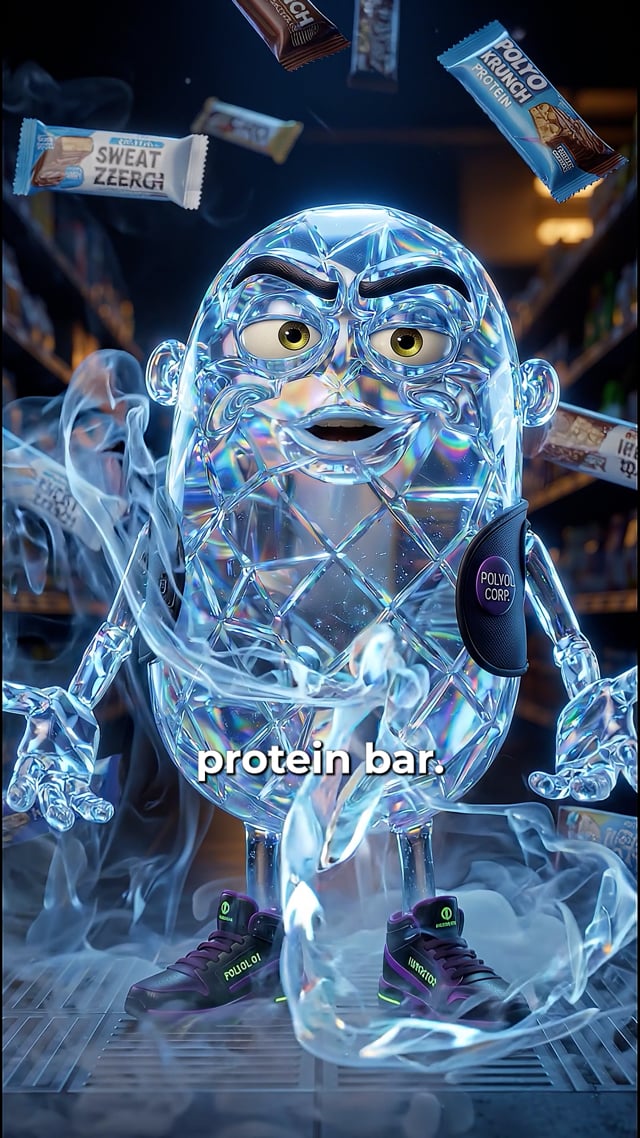 AI ANIMATION
 AI UGC
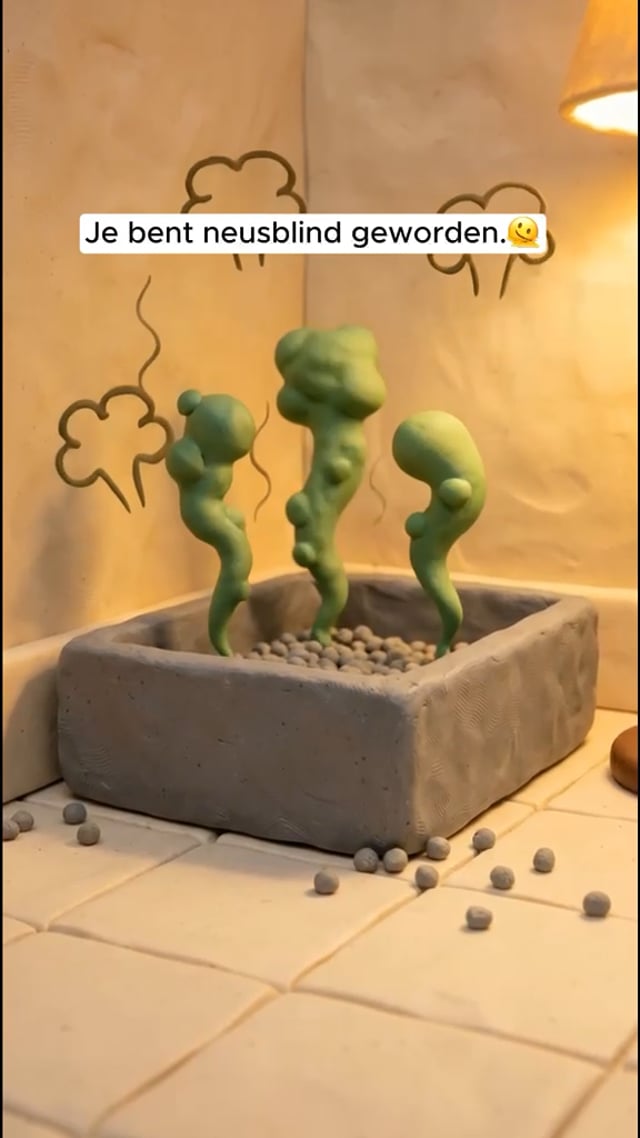 AI ANIMATION
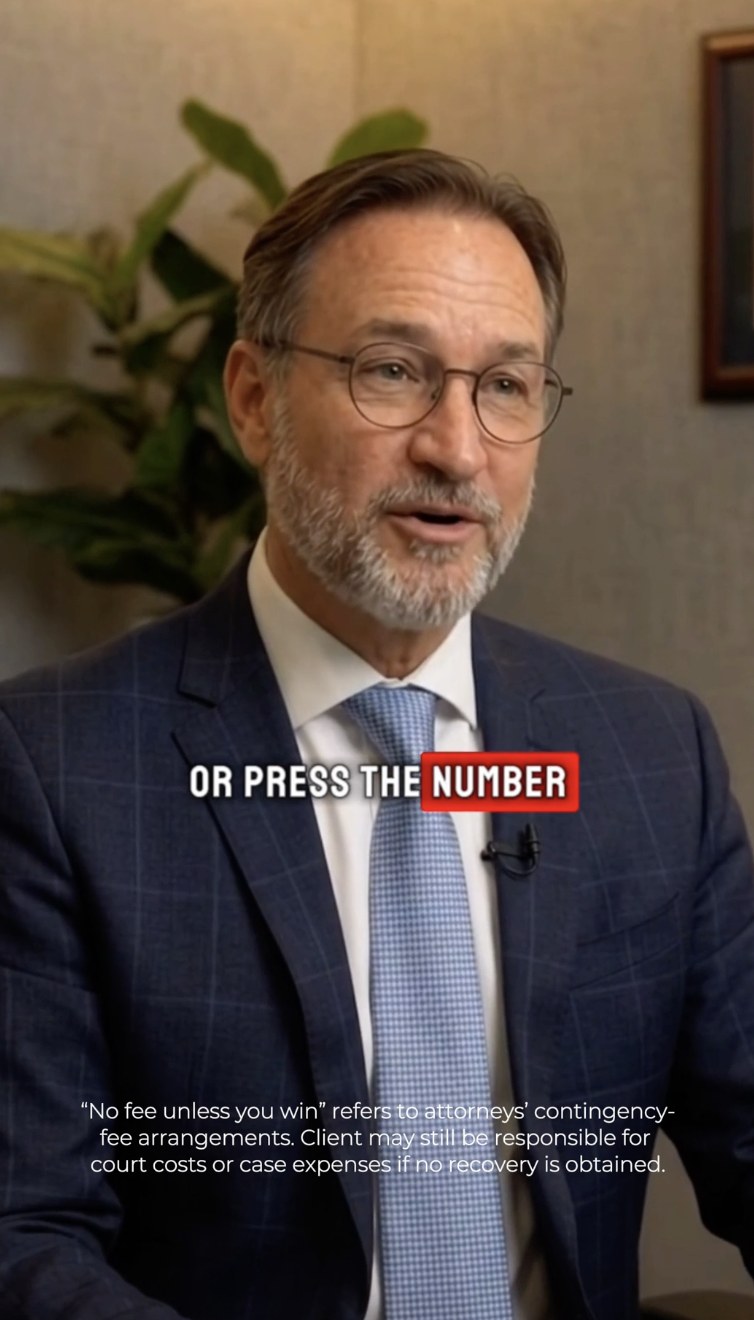 AI PRESENTER
 AI UGC
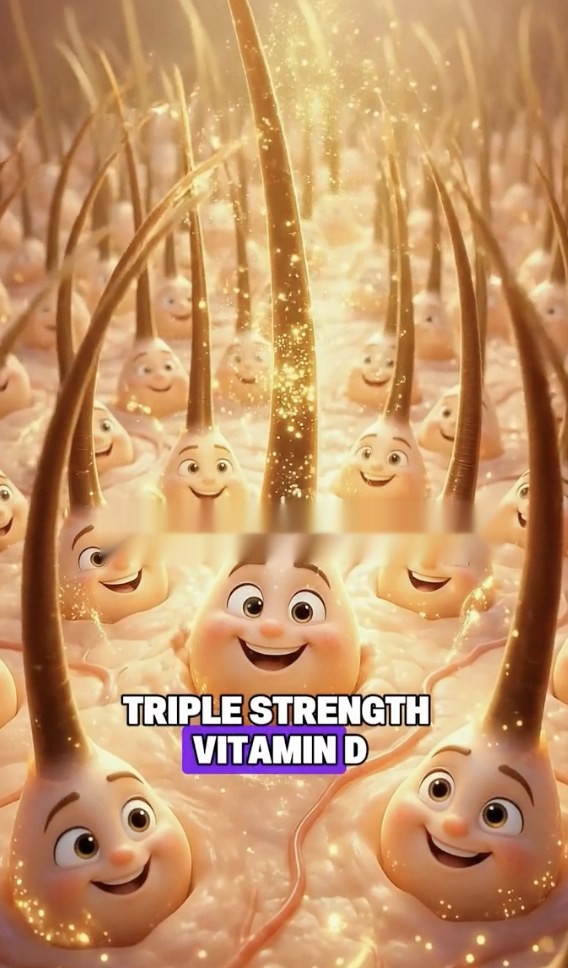 AI ANIMATION
What's actually working: AI voiceover over real UGC
AI voiceover over real footage is the format we've scaled furthest for clients. The numbers below come from one food brand we work with, all Meta-reported, in euros.
One script, a mash-up of real UGC clips read by an AI voice, was marked as a winning script and reused across seven different ads. Across all 65 AI voiceover ads we created for the brand since October 2025:
- €11,999 spend, 670 purchases, €17.91 cost per purchase, 3.23 ROAS overall.
- On cold traffic: €7,265 spend, 333 purchases, €21.82 cost per purchase, 2.29 ROAS.
- On retargeting: €1,817 spend, €11.22 cost per purchase, 5.52 ROAS.
The fair comparison is cold traffic, because that's where new customers come from. All video on cold for the same brand, November 2025 to October 2026, ran at a €26.29 cost per purchase and 1.88 ROAS. The AI voiceover ads beat that by about €4.50 a purchase.
The best single ad in that group spent €3,227 at a €15.01 cost per purchase and 3.69 ROAS, and a later brief named it "the existing winner" to build from.
Why we think it works: the footage is real. Real people, real product, real hands. The AI is only doing the voice, which is the cheapest part to change. That means one strong edit can be re-voiced for a new angle or a new market without a reshoot. We turned one ad into versions for two new markets this way, as a low-cost test on ads that were already working.
The caveat: a robotic or condescending AI voice collapses trust instantly. The voice has to sound like someone you'd actually listen to.
What Meta's own numbers say about AI creative
Meta has been publishing results from its built-in AI creative tools, and they're worth knowing before you decide how much of your mix to hand over.
- Image generation: in October 2024, Mark Zuckerberg said more than a million advertisers had used Meta's generative AI tools to create more than 15 million ads in a month, and that businesses using Image Generation were seeing an estimated 7% increase in conversions (Marketing Dive).
- Video generation: in Q1 2026, Meta said that in a large-scale test, advertisers using video generation drove a 3% gain in conversion rates compared with those who didn't, and that over 8 million advertisers were using at least one of its AI creative tools (PPC Land).
- Spend behind it: by Q4 2025, the combined revenue run-rate of Meta's video generation tools had hit $10 billion (Meta).
How to read this: a 3% to 7% lift is real, but it's a lift on top of whatever the ad was already saying. These tools make more versions of your message. They don't find you a better one. The big jumps still come from the angle, which is why we use AI for production and keep the strategy human.
AI statics: volume once the angle is decided
AI statics are where the speed is most dramatic. Our Claude Code and Nano Banana Pro static generator can put 10 ads live in one run and produce 100 in about 25 minutes, all built around the real product photo. The catch is the same as everywhere else in this guide: 100 statics with one claim behave like one ad, so the angles have to be decided first.
How we make an AI ad: our workflow
This is the process our team follows for AI UGC and AI presenter ads.
- Script. Claude writes "iPhone style UGC" prompts with a global style block, details for each scene, and a negative prompt that rules out the giveaways: studio lighting, perfect symmetry, a model agency face.
- Avatar. Nano Banana Pro builds a full-body avatar on white, then five expressions. Pose and lighting are transferred from reference images so the person stays consistent.
- B-roll. Google Flow for cost-effective shots, Higgsfield Cinema Studio when we need cinematic ones.
- Voice and talking head. An ElevenLabs voice, then HeyGen turns a photo into a talking-head video of up to a minute.
- Draft, then final. We render a low-res silent draft first (480p, about 4 seconds), batch every piece of feedback into one revised prompt, then render the final at 1080p. We generate the exact script length plus one second.
- Edit. Everything comes together in Premiere Pro. Text and logos go on in post. They're never generated by AI.
The speed difference is real: 10 AI UGC image variants on day one in two to three hours, and video versions on day two, with no shoot to book.
Where AI ads fall down
AI ads fail in predictable ways. We've hit every one of these in AI drafts, which is why every AI ad gets checked by a person before it goes anywhere.
- The uncanny look. Faces that are slightly off, hands with the wrong number of fingers, garbled text and logos, artefacts, lighting that doesn't match between shots.
- Wrong product, invented claims. AI will happily put the wrong product in the shot, invent a claim the product page doesn't make, or add a five-star review to a product that has no reviews. We've also had it misspell the copy ("clean enegry").
- The average angle. Ask AI for an angle and you get the average of your category. Fifty AI statics that all make the same claim get grouped together by Meta and shown to the same people, so the volume buys you nothing.
- A voice nobody trusts. Robotic delivery, or a tone that talks down to the viewer, kills an ad in the first seconds.
- Labelling you didn't plan for. Meta adds an "AI info" label in an ad's "About this ad" menu when you use its Background Generation, Image Generation or Add Animation features, and when it detects third-party AI edits through metadata standards such as C2PA (Social Media Today). Check Meta's current policy before you launch, especially for anything showing a person.
Our rules for AI ads
These are the rules every AI ad we make has to pass.
- The Slop Test. The real product is in every image. Every claim is on the product page. One awareness stage per ad.
- A human approves the plan before anything generates. AI does production, not strategy.
- Text and logos are added in post, never generated, so they're always spelt right and on brand.
- Compliance checks at brief level, for example whether a product actually meets the threshold for a "high in fibre" claim.
Lots of ads, one message, the same people.
The thinking stays human. The volume comes from AI.
AI ad tool or an agency?
AI ad tools are good at one thing: making lots of assets fast. If you already know your angles, have a real product photo and can judge what's good, a tool can save you a lot of time.
Where brands struggle is everything around the generation: picking angles that are genuinely different, keeping claims true, spotting the uncanny frame before it goes live, and testing so you know which ad won and why. That's the part we do. We use the same tools, but inside a testing system, alongside real UGC and in-house video, so AI is one format in the mix rather than the whole strategy. See our AI ad creatives service and how it fits our creative testing system.
Want to see where AI fits in your ad mix?
Book a Creative Diagnostic. It's a live teardown of your ad creative on the call: where AI could cut your production time, which formats to test it on, and where real creators should stay.
Book a Free Creative DiagnosticA live teardown of your ad creative, on the call. No obligation.FAQs
Do AI generated ads work on Meta?
Some do. For one food brand we work with, AI voiceover ads over real UGC ran at a €21.82 cost per purchase on cold traffic, against €26.29 for all video on cold. The format and the angle matter far more than whether AI was involved.
What is the best type of AI ad?
For us, AI voiceover over real footage has the strongest results so far, because the people and product on screen are real and only the voice is generated. AI UGC creators, presenters, animation and statics are best for testing angles and hooks fast. Meta's own tests show 3% to 7% conversion lifts from its image and video generation tools.
How long does it take to make an AI ad?
Much less than a shoot. We produce 10 AI UGC image variants in two to three hours on day one and video versions on day two. Our static generator can produce 100 statics in about 25 minutes.
Why do some AI ads look fake?
Usually it's uncanny faces, wrong hands, garbled text or lighting that doesn't match between shots. Prompting for "iPhone style" footage, ruling out studio lighting and perfect symmetry, and adding text and logos in post rather than generating them all help.
Should I use an AI ad tool or an agency?
Use a tool if you already have clear angles and can judge quality yourself. Bring in an agency when you need distinct angles, true claims and a testing system around the volume, so you know which ads win and why.